
Bright and clean, these coffees are often light- to medium-bodied, balanced, and approachable. Many have a soft nuttiness alongside notes of fruit, honey, or vanilla, finishing with a gentle, tart clarity. They’re a natural entry point into craft coffee, while still offering plenty of nuance for seasoned drinkers, as Panama and Costa Rica are increasingly experimental.
Geisha + fincas: Many Central American coffees come from small, named farms called fincas, where altitude, varietal, and processing are carefully controlled. Panama is also home to Geisha (or Gesha), one of the world’s most prized coffee varieties, known for its delicate floral aromas and tea-like body—and for commanding sky-high prices at auction.

Traditionally known for smooth, balanced profiles with notes of caramel, chocolate, and natural sweetness, South American coffees now span a much wider range. Alongside classic comfort cups, modern Colombian and Peruvian coffees increasingly display bright acidity, florals, and experimental character.
Brazil has scale + Colombia has a double harvest: Thanks in part to its size, Brazil is the world’s largest coffee producer, which is why its coffees often bolster blends; but small-lot Brazilian natural-processed coffees can be surprisingly complex. Colombia is unusual in that many of its regions have two harvests a year, allowing fresh coffees to arrive almost year-round.

This continent has tremendous biodiversity and high elevations, yielding brightness with a vivid acidity and aromatic intensity. Expect floral notes like jasmine or lemongrass, alongside citrus and berry flavors. Body can range from tea-like and delicate to rich and juicy, depending on origin and process.
Heirloom varieties + washing stations: Ethiopia is the genetic birthplace of coffee, home to thousands of heirloom varieties still growing wild. In many African countries, cherries are processed at communal washing stations, where dozens of small producers contribute to a single lot, which increases complexity, yielding notes that can feel layered or hard to pin down.

Accordion ContentVolcanic soils and tropical climates produce some of coffee’s most distinctive profiles. Indonesian coffees tend to be earthy, savory, or smoky, with deep complexity and long finishes, while island-grown coffees from Hawaii and Jamaica tend to be cleaner, smoother, and more restrained.
Indonesian wet-hulling: Sumatran coffees from Indonesia use a distinctive method called wet-hulling (giling basah). The bean’s parchment is removed when the beans are wet, contributing to the earthy, savory flavors and heavy mouthfeel that set these coffees apart. Javanese beans, meanwhile, are often aged. Volcanic soil and humid climates do the rest.

NOTE:
While these regions account for most specialty coffees you’ll encounter, some roasters also work with emerging or historically significant origins such as Laos, Vietnam (specialty grade), Thailand, China, or Yemen, one of the birthplaces of coffee, whose offerings are distinctively winey and spicy, with dried-fruit profiles. These profiles don’t always fit neatly into regional expectations but are increasingly present in progressive roaster lineups.
Seasonality
Outside equatorial countries, coffee is seasonal, and beans tend to shine a few months after harvest. As a general guide, coffees from Central America and Mexico (largely northern hemisphere) peak from spring into early summer, while many South American and some African coffees arrive and taste their best from late summer through fall. Thanks to improved sourcing and roasting, exceptional seasonal coffees are available year-round—but drinking with the harvest still reveals them at their most expressive.
Several local roasters offer monthly seasonal coffee subscriptions. At a growing number of coffee shops, seasonal coffees are also regularly offered as specials every weekend. This is where you might find, when it’s in season, the elusive Panama Geisha, prized around the world.

Brewing Methods
Whether at home or at a shop, here are some of the most common methods of getting coffee into your cup.
Immersion
The coffee beans and the water sit together for the entirety of the brewing process, producing a thicker body at the expense of the coffee’s more delicate nuances.
Examples: French press, AeroPress, cold brew
Filtration
Filtration involves running hot water over loose coffee and through a filter. Pretty straightforward, right? This creates a subtle, clean, and crisp profile, particularly as the filter absorbs some of the coffee oils.
Examples: Filter/drip/pour-over (V60, Kalita, Chemex), also Kyoto cold brew tower
Pressure
This method involves pressurized hot water being forced through ground coffee to produce a greater viscosity and an intensity of flavor in a small package.
Example: Espresso Machine
Processing Methods
Before coffee ever meets a roaster or barista, it exists as a fruit (called a cherry, with a bean or pit inside). How that fruit is handled after harvest—its processing—has a profound effect on the flavor in your cup. Think of processing as artful fermentation: the careful management of time, temperature, microbes, and moisture to articulate flavor.
Terroir provides the raw material, but the choice of processing, and thus the chemistry of fermentation, can augment, tweak, or even upend traditional regional flavor profiles. It’s another thing to nerd out about.

The Best North Texas Coffee Roasters
The act of roasting, at its most basic interpretation, is simply toasting coffee. You need heat to unlock the flavors of the pale “green” coffee bean, which is the pallid, jade-like color your coffee beans look like prior to being blasted with heat. The flavor in your cup starts here. The roaster acts as an oven, dispersing heat over the coffee beans until they crack. They’re then removed, cooled, and packaged. The variations matter: the amount of heat and the roast time determine a dark or light roast. This is why you taste deep flavors of chocolate or something more delicate and floral. Part of the flavor profile comes from the coffee cherry’s terroir and processing; part from the roasting. Lucky for us, Dallas has an assortment of roasters toasting coffees across the continuum of flavors. Let’s meet some of them.
Addison Coffee Roasters
Few names in Dallas coffee carry the low-key gravitas of Addison Coffee Roasters. They began roasting as The Coffee & Tea Trading Co. in 1984, operating in a storefront in the old Prestonwood Mall. They were among the first in North Texas to insist that coffee could, and should, be treated as a craft. The late-70s mall is gone; the ethos remains.
Today, Addison Coffee Roasters operates daily from its Addison headquarters and roastery-café in Forney. The Addison location functions as the nerve center, with production, retail sales, and distribution to local coffee shops, Central Market, and H-E-B. A beloved veteran machine—a green U.S. Roaster affectionately known as “Patty”—hums there everyday, a cast-iron workhorse that rewards skilled hands with consistency and depth. In Forney, newer Diedrich machines (the DR-25 alongside an IR-12) handle smaller batches in an open setting where customers can watch coffee roast while they sip.
What distinguishes Addison, besides longevity, is breadth. Single-origin coffees and blends sit alongside flavored offerings; decaf is treated with the same seriousness as flagship roasts. Beans arrive from across the globe—Fair Trade, organic, and direct relationships highlighted—and are roasted with an emphasis on integrity and approachability. There’s nostalgia here, but not stagnation: generations of Dallas coffee drinkers have learned here what freshly roasted coffee can be, and why it matters.
Ascension
Russell Hayward opened Ascension Coffee on Oak Lawn Avenue in 2012 with no aspirations of roasting. But then came the consistency and quality problems from his suppliers. That first year was filled with these hiccups. Baristas found wild flavor swings and inconsistent roasts from the supply they were receiving. This caused constant fluctuations in bitterness, acidity, and body; they were continually tweaking their dials to hit their desired profiles.
And in some of the blends they received, the beans would come in different sizes and densities, which caused issues when grinding. The baristas felt powerless in controlling consistency. It seemed roasting was, in Hayward’s opinion, the only option to ensure his shop was properly supplied. In January of 2014 it all came together. He had a Canadian roaster fly down to Dallas to train him, then an Australian friend came to work with him for a month. He spent the next year slowly building up a roasting practice and dialing in Ascension’s first espresso blend, known as Levitate. It took two years.
Now Ascension supplies all of its shops with its own coffee. And while some of it moves through wholesale, its main purpose is to be the support system for its three stores, which double as cozy places to eat.
Cultivar
Tucked away in a nondescript warehouse a block from their coffee shop in East Dallas, Cultivar roasts on a Probat, a brand that has been in the business of coffee for 150 years and whose products are found in the roasteries of big names such as Intelligentsia and Counter Culture. Jonathan Meadows and Nathan Shelton, who founded Cultivar in 2009, are tuned into the science of roasting with an exciting balance of ease and attention. The two bring a wealth of experience and devotion that is impossible to miss in their coffee.
Cultivar focuses mostly on single-origin coffees, and the beans are available in several retail locations in Dallas. Get some.
Edison Coffee Co.
With their roastery and training lab now across the railroad tracks from old town Lewisville, Edison has been sparking joyful mornings for more than a decade. Melanie and James Edison McWhorter met while working at a coffee shop during college at Texas A&M, then opened their own namesake roastery in 2013. The company, which champions education, offers a pristine single-origin line, blends with names like Luminary, Phonograph, and Transmitter—and accompanying retro line-drawing illustrations—instant coffee, and even their half-caf blend named (wait for it) … Low Beam, with tasting notes of Lucky Charms and baked berries. Join them for public monthly coffee cupping sessions. What was once a network of two coffee shops supplied by both an off-site bakery and off-site roastery is now a vast, beautiful all-in-one indoor space with interior window walls, sliding doors, a coffee table made from a mesquite tree on the family ranch—and, of course, Edison bulbs.
Eiland Coffee Roasters
Eiland Coffee Roasters operates with the confidence of a rebel who has nothing to prove. Founded in 1998 by Clay Eiland, the Richardson-based roastery predates much of Dallas’s specialty coffee scene and helped establish it. Eiland’s path began with a revelatory cup in Seattle—a glimpse of what coffee could be at a time when the Pacific Northwestern region reigned supreme. Determined to bring that standard home, Eiland taught himself to roast through experimentation and mentorship, years before online tutorials existed.
At the center of the operation is a machine as storied as the roaster himself: a rare 1969 German cast-iron Probat UG-22, widely regarded as one of the finest roasters ever made. Eiland searched for years before securing his, and it remains the heart of the business. On it, he roasts an unusually wide-ranging catalog—single origins from Colombia and Papua New Guinea but also China and beyond; modern, fruit-forward espresso blends; and darker, more traditional offerings—all united by unique sourcing relationships and profiles.
Eiland is also a relentless quality hawk. In 2013, he became the first person in North Texas to pass the Q Grader exam, coffee’s equivalent of a sommelier certification. Regularly released microlots sometimes sell out within days. Though the team is small, the reach is broad, supplying coffee shops and restaurants across DFW while maintaining two Richardson locations, one a full café, the other a roastery storefront.
Full City Rooster
Founded in 2013 by owners Chris and Michael Wyatt, Full City Rooster offers only single-origin coffees from its home in The Cedars. As he stands over his roaster during a cook one recent morning, Michael pulls a handful of beans from the sampling handle and slowly breathes in the scent. The smoke billows around his tattooed arms and his eyes are shut; he appears completely transfixed.
Those beans come out of a pricey Loring Roaster, which distributes heat to the beans evenly using 80 percent less energy than other roasting machines. Michael Wyatt has roasted beans for more than 30 years, making him somewhat of a mad scientist in his focus. He and his wife’s dedication to preservation extends to their sourcing: they only use beans certified by the Rainforest Alliance, a nonprofit that verifies that the coffee has been grown sustainably and transparently. The roasts aim to achieve a balance of body, sweetness, and flavor. Most of the coffees come out in the medium range, showcasing the flavors of chocolate and caramel notes. Your best bet for finding these comforting coffees is to visit their shop on South Akard. It’s a cozy little space and, if you’re lucky, you might see the Loring in action behind the bar.
Function Coffee Co.
For founder Tony Daussat (alongside partner Devin), coffee has always been a source of comfort (a mug sipped in his grandmother’s kitchen in Beeville, Texas) and curiosity. Years spent working in coffee shops in New York and Los Angeles sharpened that curiosity and built skills. When Tony returned to Texas, he installed a Bellwether electric roaster in Northlake and began roasting.
The Bellwether, the first and only zero-emissions roaster in Northlake, anchors Function’s ethos, which is future-facing even as its logo is nostalgic and retro. In the first year, Function operated exclusively as a roasting endeavor, producing retail coffees and a line of ready-to-drink canned cold brew lattes sold at farmers markets and elsewhere. A Northlake brick-and-mortar is planned for spring 2026.
JuJu’s Coffee
JuJu’s Coffee began the way many good things did in 2020: with nowhere to go and time to think. UNT graduates—and newlyweds—Julia and Nick Rocha found themselves stranded in Amarillo during spring break, classes suddenly online, the future suddenly wide open. They bought a 1962 Airstream trailer, named it Otis, and spent the better part of a year and a half turning it into a coffee shop on wheels. Nick drove six hours most weekends between Denton and Amarillo to renovate it by hand. Coffee had always been part of their relationship.
By 2022, JuJu’s (based on Julia’s nickname) was popping up at weddings, neighborhood events and farmers markets, its retro trailer becoming a familiar sight across DFW. When a small Lakewood space opened up, already equipped with a roaster, the Rochas couldn’t resist. JuJu’s brick-and-mortar opened in 2023 and immediately felt like it belonged there.
The shop is cheerful and unpretentious: pink floors, a retro espresso machine, vintage accents, and just a few tables—more grab-and-go than camp-out-all-day. Behind the bar, Nick and Julia roast the coffees they serve and make all syrups in-house. On weekend mornings, families often walk over with dogs in tow. The Rochas know the regulars by name. JuJu’s is small, scrappy, and personal—the kind of place that reminds you coffee shops can still feel like neighborhood gems.
La Souq
La Souq opened in Richardson in December 2024 and immediately felt unique. Owned by Hira Siddiqui and her husband, Mateen Husain, who met in Dubai and moved to Dallas in 2021, the roastery-café draws heavily from Middle Eastern traditions while foregrounding a contemporary touch. The name, meaning “market” in Arabic, fits a place of gathering, exchange, and small ceremony.
The decor is striking but restrained—neutral tones, warm woods, dark leather seating, old clay vessels, and an olive tree anchoring the room. At the center sits a small-batch electric roaster, reinforcing that this is not just a beautiful café but a working one. La Souq began roasting coffees sourced primarily from Mexico, Brazil, and Guatemala, with plans to expand its single-origin offerings.
Lemma Coffee Co.
Founded in 2017 by Daniel Baum, Lemma began humbly. Baum roasted out of a Denton warehouse for farmers markets and served drinks from a now-retired coffee truck before opening his first brick-and-mortar location in downtown Carrollton in 2019. Frisco followed in late 2020, a bold pandemic-era opening, and Plano in 2022. Each space—brick-forward, lightly industrial, wholly relaxed—reflects the company’s steady, considered growth.
A radical centering of producers lies at the heart of Lemma’s identity. You see it on Lemma’s retail bags, where a producer’s name often appears larger than the country of origin, accompanied by altitude, varietal, and processing details. Far from a branding flourish, this design choice communicates a philosophy. Case in point: Ignacio Gutierrez’s natural-process Gesha coffee from El Salvador or Nesru Aba Nura’s Ethiopian microlot harvest are presented as collaborations rather than commodities. Lemma’s seasonal offerings range from pristine single-farm lots to wildly ambitious blends—think a Nicaraguan blend combining natural, honey, and carbonic maceration processes—that read as both ultra-nerdy and joyful. Their most popular year-round blend, Overtone, is dialed in for what they tout as “a dynamic cup across all brewing methods.”
After years on a Probat drum roaster, Lemma recently introduced a Typhoon fluid-bed roaster (using hot air to move and cook beans) in spring 2025, bringing a new dimension of clarity and vibrancy to their already light-handed style. The results skew luminous: peach tea, jasmine, baklava, mango—notes coaxed out through restraint and according to best contemporary practices. Lemma is unapologetically anti-dark roast, committed instead to clarity and subtlety.
Merit Coffee Co.
Merit Coffee began in San Antonio in 2009, founded by husband-and-wife team Robby and Neesha Grubbs, who had met in Deep Ellum. Since then, it has grown into one of Texas’ most influential specialty roasters. In 1994, Robby opened the first Starbucks in Texas, then returned to coffee after a detour into real estate, determined to build something more personal and enduring. What began as neighborhood coffee shops operating under the name Local Coffee evolved into Merit Roasting Co. in 2014—a name chosen to reflect the company’s guiding belief that everything has value.
Merit sources coffee directly from producers primarily in Central and South America and Africa. Most offerings are single-origin, selected for their character. Once in Texas, the coffees are roasted on custom-built Probat roasters designed in Germany.
Native Coffee Co.
Native Coffee Co. occupies a rare position in Dallas coffee: one foot firmly at origin, the other at the counter. Founded in 2018 by father-and-son duo Tracy and Luke Jackson, the shop has been co-owned since 2023 by Colombian producer Diego Bermudez, whose name is familiar to anyone tracking the cutting edge of contemporary coffee processing. (For instance, gas chromatography to map the aromatic compounds present in the coffee cherry so flavors can be amplified during fermentation.) Bermudez roasts many of Native’s coffees in Colombia, sometimes within a few weeks of harvest, before they reach Dallas, championing a shift toward producer-led roastery based at origin.
Bermudez is best known for his work with advanced fermentation techniques, including thermal shock processing, which has produced some of the most talked-about coffees of the past few years. At Native, a roastery and showroom for Bermudez’s innovations, those coffees show up on the pour-over menu with uncompromising rigor. A “competition drip” might read as expensive, but the cup explains itself: spiced citrus, lemongrass, ginger, lime—exceptional flavors delivered with startling clarity. Alongside these are washed pink bourbons and other terroir-forward offerings under Bermudez’s newer project, Hachi, which emphasizes limited lots with unique, experimental coffee processing techniques tailored to “maximize the genetic expression of each variety” and also look toward the future of coffee cultivation sustainability. Working with Panama-based producer Allan Hartmann, he brings together a radical microbiology/biotechnology-driven mindset with a deep environmental ethic.
Whether talking about Bermudez’s Hachi offerings, guest roasters, or even matcha, Native’s baristas are notably fluent, happy to walk customers through process, producer, and profile.
Noble Coyote
Kevin Sprague always loved figuring out how things are made; he made his own pasta and milled his own flour. His then-girlfriend and now wife, Marta, suggested he try roasting coffee and bought him a table top roaster. That was 2003, and he’s been doing it ever since.
What started as a hobby grew into an obsession. Together they traveled widely,sourcing coffees and meeting with roasters. In 2010 the company they worked for shut its doors, so they decided to roast full time. In the world of coffee, a “coyote” is someone who takes advantage of farmers. Kevin and Marta’s goal was the opposite: to support coffee farmers by working through direct trade and eliminating the middleman. Their dog also resembled a coyote. So Noble Coyote was born.
They began in 2011, at the White Rock Local Market. Now established in Expo Park, they have a cult following and minimalist coffee shop, and their beans can be found at coffee counters and specialty grocers throughout the city. Hallelujah.
With their Diedrich Roaster, which processes 18.5 pounds per roast, Noble Coyote early on earned a Good Food Award, putting them in the same company as the nation’s most revered brands. Kevin and Marta use mostly single-origin coffees along with a few blends. Those blends typically come out of experimentation. They’re willing to try things, to notice different flavor nuances unique to the beans and then pair them together. They don’t believe in any set route for roasting. Instead, they embrace the diverse possibilities of each bean, which explains why you’ll find so many variations on the shelves.
Novel
Kevin Betts and Ryan Smith had been friends for a decade, but their love of coffee didn’t blossom for another five years. Smith was experimenting with roasting at home. His guest bedroom was wall-to-wall storage for green coffee. He started selling his roasts from a pop-up coffee cart at the White Rock Market in 2008. Betts, meanwhile, got a barista gig at Roots Coffee in North Richland Hills. The two attacked it from all angles.
The process-oriented Betts and the experimental Smith were good fits for a partnership in coffee roasting. While Betts develops consistent roast profiles, Smith searches high and low for the right coffee sources, often traveling to Central and South America for coffee competitions and to visit various farms. For Novel, consistency is paramount, yes, but it’s not always a given from any particular farm. So they keep their options open.
Once they have that coffee back home, it’s their customized Giesen roaster that allows them to exact the profiles they so passionately insist upon. Landing a roast curve for Novel—the temperature applied to the coffee inside the roaster across the cook time—involves microscopic measurements that are fantastically nerdy in every way. Novel coffees are available online and in select shops and counters around Dallas.
Oak Cliff Coffee Roasters
Co-owned by super couple Shannon and Jenni Neffendorf, Oak Cliff Coffee Roasters sold its first batch of beans in March 2008, roasted in their garage. Three years before that, Shannon was inspired by an espresso he tasted on a trip to Milan. It took him a year to begin roasting coffee himself. They were able to purchase a 6,500-square-foot former auto shop in their neighborhood in 2010. Today, Oak Cliff Coffee Roasters is an unstoppable force in Dallas, having added Five Mile Chocolate and Candor Bread to its CliffMade repertoire of craftsmanship. Recently, East Kiest Farm, CliffMade’s urban farming project, has added a permaculture orchard fruit, pastured eggs, and local honey.
Roasting in the back of Davis Street Espresso, the couple’s no-frills (and no Wi-Fi) coffee shop, where they also make jam, butter, yogurt, pastries, and granola in-house, Oak Cliff Coffee was also the first local roaster to offer coffee in Dallas grocery stores with the date of roasting on the bag. Occasionally, they sell espresso from the sidecar of a motorcycle, lovingly named Motokofe, their way of bringing their best espresso to parties and events around town.
A shop next door to Davis Street Espresso is strictly devoted to selling coffee brewing supplies. The Neffendorfs also pride themselves on being good stewards of the environment, whether helping farmers from whom they source improve their processes or maintaining transparent transaction practices with all businesses. They even bring their four children along on sourcing trips. It’s certainly not difficult to find their coffee in this city, so if you haven’t had any, you’re not trying hard enough.
Parks Coffee Roastery
Parks Coffee is Dallas coffee at scale—and proudly so. Founded by Randy Parks in his family garage in 1986, the family-owned company has grown into a multi-state operation supplying offices, institutions, and homes across numerous states. Yet it remains rooted in Carrollton, where an impressive new roastery and café opened in 2019.
Inside the facility, from a catwalk, visitors can look down onto a gleaming, hammered-copper roaster so large it’s almost architectural. Burlap sacks of green coffee line the back wall; nearby, machines hum as they package K-Cups and single-serving products destined for corporate accounts.
Despite the scale, Parks feels down-to-earth and approachable. The bright coffee shop area serves more than 20 of its own coffees—from flavored classics to single-origins—alongside baked goods from local bakeries. Staff lead tastings and tours that demystify large-scale roasting. Parks occupies an intriguing middle ground, offering a place where you can witness coffee roasted by the ton, then sit down with a cup and learn exactly how it got there.
Pax & Beneficia
Pax & Beneficia translates to “peace and blessings” in Latin, a phrase that neatly captures both the spirit and ambition of the cafés that now stretch across DFW, from Las Colinas to Victory Park. Founded by first-generation Palestinian Americans and close friends Mouyyad Abdulhadi and Mamdouh Khayat, the concept grew from a shared belief in coffee as a language of hospitality. Inspired by a trip in Scandinavia, the coffee shops’ bright, modern spaces frame one of the world’s oldest brewing traditions.
At the heart of Pax & Beneficia is Turkish coffee, prepared traditionally in a cezve and served unfiltered. Both founders learned to make Turkish coffee at a young age, and those early memories continue to shape the business. Their version includes cardamom, resulting in a dynamic, aromatic cup. Alongside this slow, ritual preparation sits a fully modern coffee bar, equipped with La Marzocco espresso machines, precision grinders, and pour-over gear, offering a wide range of options. Coffee at Pax & Beneficia is ethically sourced and roasted at the Grapevine facility.
Slow & Steady Coffee
Slow & Steady Coffee comes by its name honestly. After purchasing a modest midcentury ranch house in Elmwood in 2020, owners Jael and Germán Sierra spent years fighting zoning codes, parking regulations, and renovation delays. What finally opened in 2023 resembles a neighborhood living room, where coffee happens to flow as steadily as the act of persistence.
Inside, half the space is devoted to brewing and roasting, the other half furnished like a home: vintage seating, warm wood, and light pouring in through newly added picture windows. Germán wanted to preserve the house’s original midcentury character, nodding to the timelessness of the furniture his parents grew up with.
Continuing a roasting practice that began in 2016 under the name Graph Coffee, Germán roasts all of Slow & Steady’s offerings on a customized Probat P12. His coffee awakening came years ago in Portland, with a natural Ethiopian brew that sent him down the rabbit hole. He learned through obsessive experimentation and guidance from some of the industry’s brightest. Today, Slow & Steady focuses on transparent sourcing, long-term importer relationships, and coffees that reward patience—whether brewed on the La Marzocco Linea PB for espresso or taken slow as pour-overs.=
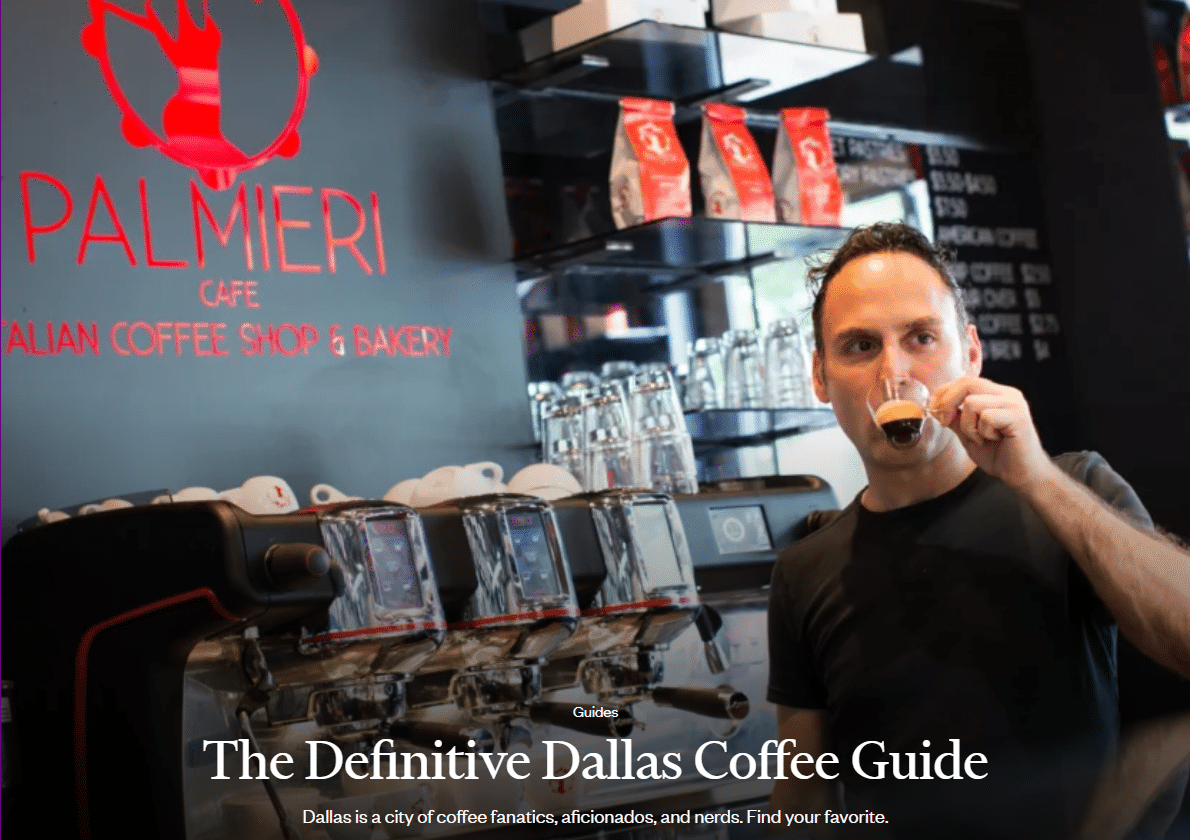
Torrefazione Palmieri
Corrado Palmieri, owner of the beloved Italian café first anchored in the Dallas Farmers Market that bears his name, is also a roaster. Palmieri perfected his pastries by returning to his native province of Lecce in Southern Italy to study the custard-filled pasticciotto specific to his hometown. HisPiemontese hazelnut and Sicilian pistachio gelato rivals any in Italy. Finally, he took the next logical step and turned to roasting his own coffee.
For this Italian-born entrepreneur from the native land of Slow Food, the aim was always to control the process and make his business a place of artisanry from top to bottom. Switching from the custom espresso blend made for him by a roaster in Puglia, Italy, he began his apprenticeship. “I found a small, local roaster near Milan,” he says. “I asked him if he could teach me.” From this seasoned roaster, he learned the nuances and technical points for Italian-style espresso roasts. Then Palmieri turned to the United States, finding two small-batch, craft roasters—one in Virginia, one in Illinois—willing to teach him the same for American-style drip coffee roasts, knowing that his clientele would expect both.
He rented commercial space in North Dallas and began roasting in small test batches, zeroing in on the beans that suited him. His goal: to offer an experience of the full spectrum of coffee processes and roasts. At the counter are dark, medium, and light roasts; washed, pulped, natural, and natural processes are represented by his single-origin beans. Meanwhile, the espresso is a blend of Arabicas. The final piece is in place. Palmieri’s hand is behind everything at his two buzzing cafés, from buttery pastry crumb to the fragrance of coffee.
Tweed
Jonathan Aldrich, lead roaster at Tweed Coffee Roasters, began his coffee adventures at White Rock Coffee in 2007. But he met his future colleague, Sean Henry, after moving to Austin. Henry is the founder of Austin’s Houndstooth Coffee, which has since opened three stores in the Dallas area.
Houndstooth became one of the first shops to carry multiple roasters, but Henry soon decided he wanted to do things his own way. He brought Aldrich on as lead roaster and launched Tweed in 2013. Balance is the most important element in their coffee. With their 15 kilogram Giesen roaster, Tweed makes great effort to produce roasts that balance acidity and body, sweet and savory, in order for their coffee to be attractive to all types of palates. Tweed is sold exclusively in Texas—the majority of their market is split between Austin and Dallas. The rest goes to San Antonio, Midland, and Abilene.
But you won’t easily find one of their rotating single-origin or three-blended coffees in retail stores. Tweed is mostly sold in shops and restaurants, but their coffees are available online. It’s also the only coffee sold at Houndstooth. Drink up.
Tre Stelle Coffee Co.
Tre Stelle Coffee Co. was born from family and cultural memory. Founded in 2019 by father-and-son team Yordan and Jonathan Ghebreamlak, the roastery and coffee shop (opened in 2022) derives its name from a beloved café in Asmara, Eritrea, which Yordan frequented in his youth. “Tre Stelle,” Italian for “Three Stars,” also nods to Eritrea’s deep Italian influence and signals the company’s guiding mission: “bridging the gap between modern and traditional coffee.”
White Rhino Coffee
White Rhino Coffee began modestly in Cedar Hill in 2007, the side project of Chris Parvin—a probate lawyer, lifelong North Texan, and longtime city councilman—who simply wanted to create a place where neighbors could gather over a good cup of coffee. The first abode was a small house, humble and unassuming, and Parvin had no intention of building an empire. Demand, however, had other ideas.
Nearly two decades later, White Rhino has grown into one of the region’s most expansive local coffee companies, with a dozen locations stretching from Deep Ellum and Uptown to Forney, Fort Worth, Frisco, Waxahachie, and beyond.
In 2024, Parvin launched the White Rhino Coffee Foundation, formalizing years of philanthropy into a focused mission that partners with local nonprofits to address homelessness, hunger, and at-risk youth across North Texas. Recently, White Rhino signaled a new chapter when it acquired Emporium Pies, the local pie shop mini-chain.
White Rock Coffee
Nancy and Bob Baker opened the first White Rock Coffee location in 2005, at a time when few coffee shops were roasting in-house. Twenty years later, they have seven locations that bloomed outward from the OG Lake Highlands spot with its peaked roof and neighborly atmosphere. Now, White Rock Coffee’s footprint in Lake Highlands includes a roastery, a bakery, a warehouse, and a brew lab training center that hosts classes for their baristas and the public. They’ve even launched a drive-thru location on Mockingbird Lane.
The coffees themselves range from single-origin options to crowd-pleasing blends that include decaf, cold brew, and espresso. The “coffeehouses,” as the Bakers refer to their cafés, are well known for their laid-back energy and for offering a perfect place to work on projects or bask in reverie with a signature drink. Regulars’ comfort hints that the roastery has been an institution for decades.
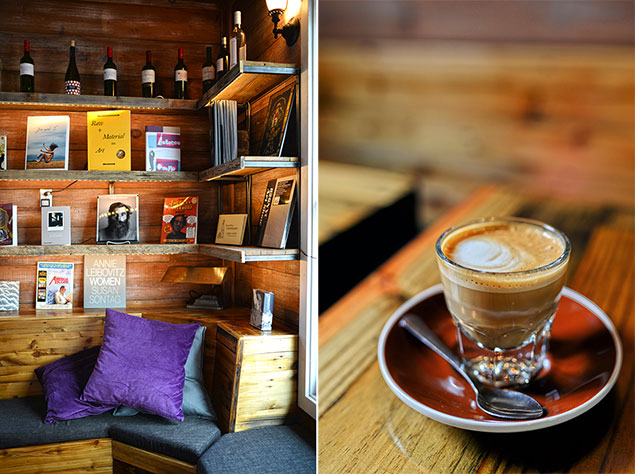
The Best Dallas Coffee Shops
Whether you’re looking to dress up for a cortado, put your head down and get to work, or catch up with a friend over a pour-over, there is a Dallas coffee shop to meet your needs. Let us guide you to the coffeehouse that best fits your needs.
GATHER WITH FRIENDS
Murray Street Coffee Shop
Deep Ellum
Upstairs and downstairs share a funky vibe, as Murray Street anchors a Deep Ellum corner near the Undermain Theater. Two levels provide room for lounging, and the upstairs space is ideal for board games or a quiet read.
Espumoso Caffe
Multiple Locations
Meet-Up language groups and clusters of friends fill this neighborhood spot that doubles as an ice cream parlor. Snag flaky empanadas, acai smoothies, and (if you’re at the Bishop Arts location) a comfy window seat that’s perfect for people-watching.
Fount Board & Table
Uptown
In the former Crooked Tree Coffeehouse space, a weathered old house in the historic State Thomas neighborhood, the decor is all dark hardwoods, earthy tones, chill vibes, and impeccable taste. The menu boasts local Lenore’s bagels, olive oil lattes, and loose-leaf teas. Find a nook in the warren of rooms to sink into a couch.
Wayward Coffee
Oak Cliff/Design District
Wayward landed on Davis Street with retro-cowboy confidence: clean lines, sidewalk tables, and just enough yeehaw charm. The coffee menu featured global guest roasters, housemade syrups, and an excellent cortado with the house Cat & Cloud beans. It was a natural stop for all specialty coffee lovers in those parts. Now Wayward also has a more ample Design District location.
Cultivar
East Dallas
Though Cultivar beans are available at several retail locations, you should also taste directly from the source at their shop inside Goodfriend Package. Cultivar leans toward washed process coffees that they rotate based on seasonality. Look for their limited-release coffees that come in quantities as small as four-ounce canisters.
Hola Café
Oak Cliff/Uptown
Hola Café, co-owned by husband-and-wife duo Jeniffer Avilá and Daniel Hinojosa, and started as a tiny Oak Cliff micro shop that swiftly grew a devoted following. The original location—now expanded across the street—offers couches and space to linger. A minimalist design sets the tone, but the cozy drinks keep people coming back: horchata lattes and well-pulled cappuccinos paired with simple comforts like warm bread and jam.
Peaberry Coffee
North Oak Cliff
When it opened in 2019, Peaberry quietly became the Kiestwood neighborhood’s best-kept secret. It’s location tends to move around Oak Cliff–the latest iteration is located inside Another Round on Fort Worth Avenue. Snag a canned Kiestwood Iced Coffee or linger over a latte.
George Coffee & Provisions
Coppell
Set inside a quaint restored white house in Old Town Coppell, George boasts multiple rooms, a porch, and a leafy patio that allow guests to spread out and settle in. The menu balances excellent espresso drinks with seasonal offerings, baked goods, wine, and shareable boards. Thoughtfully designed and deeply community-oriented, George is the kind of place that encourages lingering and repeat visits.
Wild Detectives
Bishop Arts District
Pull up a chair in this bookstore and coffee shop and nosh on an array of foods, or put your head down and get lost in a book. The backyard is a venue for concerts, performances, round-table discussions, and good old-fashioned conversation.
WORK HERE
Noble Coyote
Deep Ellum
When the owners of Noble Coyote finally landed a roastery, it offered a communal table to sit, read, or work, while a stream of regulars come and go at the tranquil Exposition Park spot.
Houndstooth
Multiple Locations
The beautiful—and, in the case of the Sylvan 30 location, award-winning—design here lends itself well to settling into your own space without interruption. All locations serve Tweed coffee (see roaster profile for the duo’s origins). Recently, Houndstooth has regularly been offering coffee shop raves, where the coffee and the beats flow.
Lemma
Carrollton, Plano, Richardson
Founded in 2017 by Daniel Baum, Lemma began humbly. Baum roasted out of a Denton warehouse for farmers markets and served drinks from a now-retired coffee truck before opening his first brick-and-mortar location in downtown Carrollton in 2019. Frisco followed in late 2020, a bold pandemic-era opening, and Plano in 2022. Each space—brick-forward, lightly industrial, wholly relaxed—reflects the company’s steady, considered growth.
Opening Bell
The Cedars
Tucked away in The Cedars, Opening Bell offers plenty of space for a secluded respite when you want to be left alone to get some work done and find the zone. The cozy space is also a music venue, so take a study break for some live tunes or an open mic pause with a latte or an affogato.
White Rock Coffee
Multiple Locations
The private upstairs lounge area is the perfect haven for getting your projects going and tapping into a no-distractions workflow.
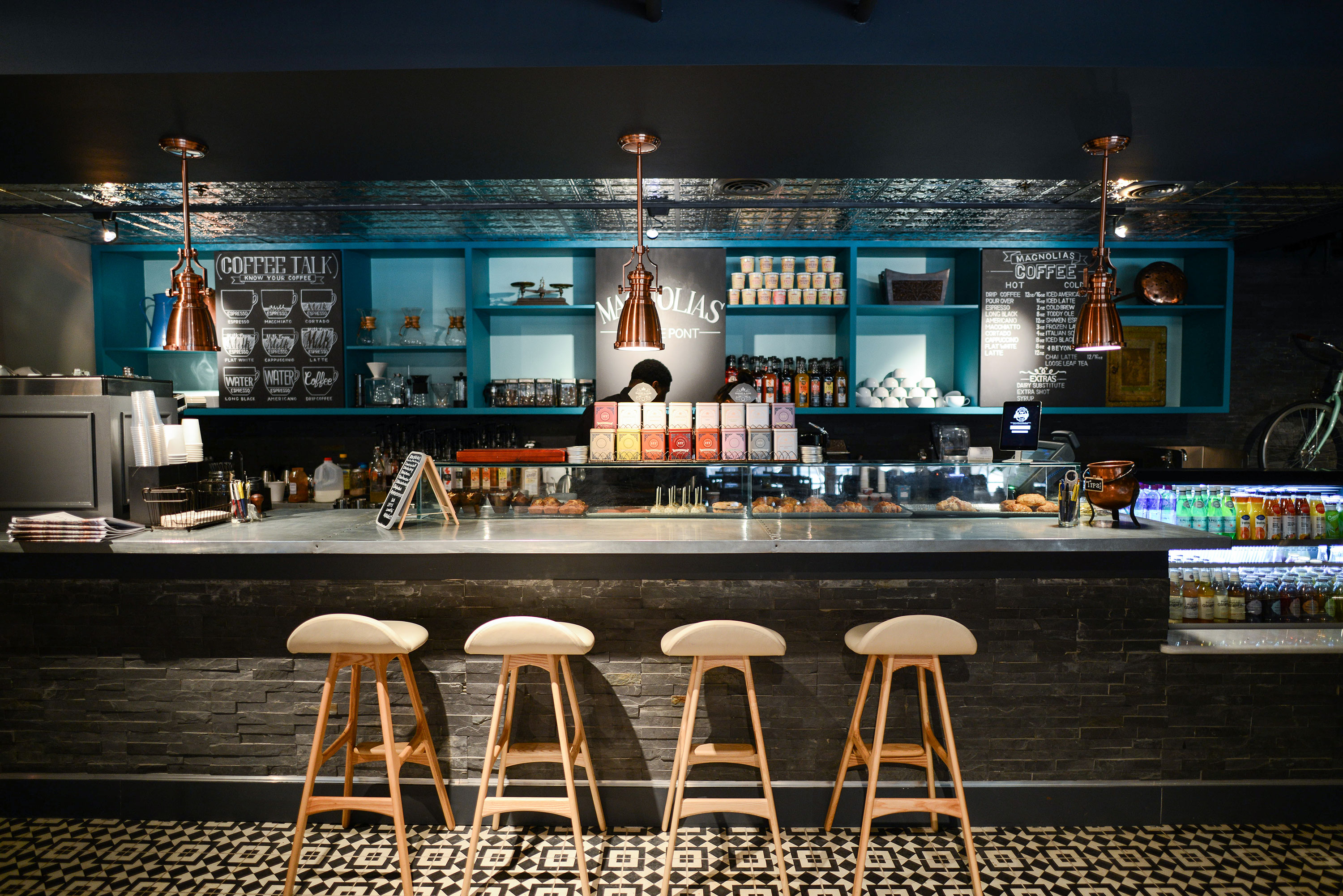
Magnolias Sous Le Pont
Harwood District
The large space and intimate living room feeling make it almost impossible not to find a place for peaceful attention and focus. Try a signature drink, like the lavender latte with soothing aromas, and work it.
Katy Coffee Lab
Victory Park
In an apartment complex just off the Katy Trail, Katy Coffee Lab is a minimalist haven that is spacious and bright, making it a perfect remote working spot. Strawberry matcha and lavender-forward lattes reside alongside solid espresso standards. It’s built to focus and refuel.
Otto’s Coffee
Downtown
Tucked inside the Adolphus Hotel, this Viennese coffeehouse channels old-world European vibes. Dark wood, polished marble tables, a library corner, and plush leather seating create a refined, cozy setting for Full City Rooster coffee and house-made pastries. A walk-up waffle window offers Liège waffles dusted in sugar. With downtown polish, Otto’s works for a quiet morning coffee or a midday escape.
Mokah Coffee & Tea
Deep Ellum
Mokah feels like Deep Ellum in coffee shop form. Niched inside the Life in Deep Ellum Cultural Center, the space leans cozy and lived-in, with Tweed coffee flowing, dark woods, leather couches, mismatched furniture, and murals stretching along exposed brick. Beyond the cup, Mokah doubles as a creative hub, hosting rotating art exhibitions and acoustic shows.
La Réunion
Bishop Arts District
La Réunion slips easily between modes. By day, it’s a work-friendly coffee shop with a sleek Modbar espresso setup and Kyoto cold brew tower. By night, it’s a lively café-bar, pouring excellent coffee-forward espresso martinis and carajillos while hosting DJs, jazz nights, and block parties. Founded by Mike Mettendorf—behind several Dallas coffee institutions (see Triumphs)—La Réunion is named for the 19th-century utopian settlement that once occupied the area, and it functions as a true Bishop Arts fixture.
SEE AND BE SEEN
Weekend Coffee
Downtown
Order a cappuccino from Weekend Coffee, then find a seat in the lobby of the Joule hotel in downtown Dallas. From your vantage point, you’ll watch chicly-dressed hotel guests and downtown dwellers pass by. Chances are, they’re looking back at you, too.
JuJu’s Coffee
Lakewood
The shop is cheerful and unpretentious: pink floors, a retro espresso machine, vintage accents, and just a few tables—more grab-and-go than camp-out-all-day. Behind the bar, Nick and Julia roast the coffees they serve and make all syrups in-house. On weekend mornings, families often walk over with dogs in tow. The Rochas know the regulars by name. JuJu’s is small, scrappy, and personal—the kind of place that reminds you coffee shops can still feel like neighborhood gems.
Café Duro
Lower Greenville
A sibling to adjacent restaurant Sister on Greenville Avenue, Café Duro feels plucked straight from Italy, with marble tabletops and china that seems borrowed from a nonna. You can sip a tidy espresso and indulge in a pastry. It’s a place to sit, observe, and feel transported, even if only briefly. Upstairs, the three-room guest house Casa Duro has been awarded a Michelin Key. Just sayin’.
LDU Coffee
Multiple locations
LDU brings ultra-confident Australian espresso culture to Dallas. Founded by Perth natives Adam and Mark Lowes, the Wi-Fi-free caffeination hotspot specializes in strong options like flat whites and long blacks, ideally paired with an Aussie-inspired toasted banana bread and hearty breakfast loaves.
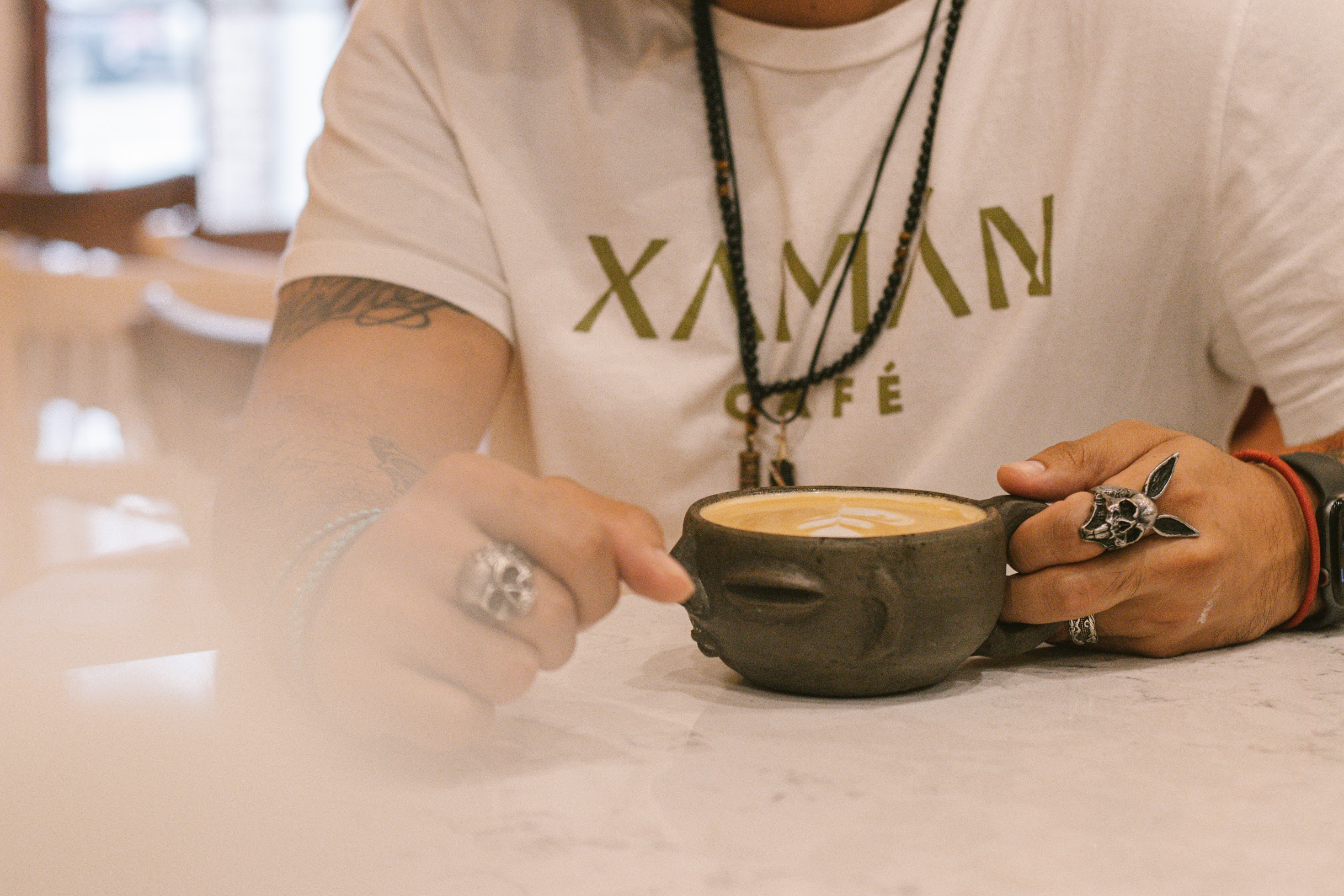
EAT HERE
Ascension
Multiple Locations
Brunch is a main attraction at this café. The farm-to-table menu boasts a croque madame eggs Benedict, chia seed pudding, avocado toast, and a selection of omelets. Expect a wait on the weekends, or choose its North Dallas location instead.
9 Rabbits
Old Koreatown
Grace Koo’s bakery in Old Koreatown replicates a modern, hip Seoul coffee shop, with local roaster Eiland coffee flowing from her Korean-made cold-brew machine, exquisite cakes, and a host of scrumptious Korean bakery treats that reflect Koo’s professional pastry training.
Palmieri Café
Multiple Locations
Attention to detail goes into Corrado Palmieri’s house-roasted coffee, house-made gelati, and savory and sweet pastries, like the cream-filled pasticiotto that’s the specialty of his hometown of Lecce in Southern Italy.
White Rhino Coffee
Multiple locations
What began modestly with one unassuming location in 2007 has grown into a regional coffee empire. Many White Rhino coffee shops are nestled inside renovated homes and other spaces where the past is preserved even as espresso machines hum. In 2021, the company opened its central roastery in a former warehouse west of downtown Dallas, later adding a coffee shop inside the facility itself—an intentional move that lets customers see, smell, and understand the roasting process.
On the food front, a new merger between White Rhino and Emporium Pies promises signature pie-and-coffee pairings.
Tribal All Day Café
Bishop Arts
Tribal approaches coffee through a wellness-forward lens, offering organic drip, free refills, and espresso drinks. Known for early adoption of beet lattes, turmeric “Goldies,” charcoal blends, and buttered brain brews, Tribal is always a good spot for caffeination and a power bowl.
Oak Cliff
Gerardo Barrera and Mauricio Gallegos are champions of small-batch coffee from Mexico. In their light-filled oasis on Jefferson Avenue, you can taste the single-origin, family-farmed beans—from states like Veracruz, Oaxaca, Chiapas—in beautifully crafted drinks like a cajeta-laced macchiato, a Oaxacan chocolate mocha, or café de olla graced with cinnamon and piloncillo. Some come served in clay cantaritos, a nod to pre-Hispanic Mexican heritage. Brunch involves chilaquiles and mollettes. Return for the sister speakeasy, Ayahuasca Cantina.
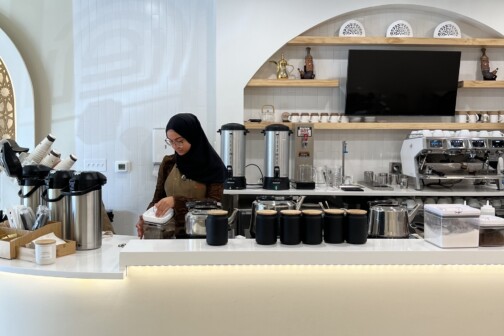
GLOBAL COFFEE TRADITIONS
Arwa Yemeni Coffee
Multiple locations: Richardson, Irving, Frisco
Warm and serene, with rich decor evoking the namesake Queen Arwa’s Mosque, Arwa, North Texas’s first Yemeni coffee shop, opened in 2022 and represents one of the cradles of coffee cultivation. Yemeni coffee and tea—spiced with cardamom, ginger, and cinnamon—are the stars, often best explored via a flight paired with classic sweets. Arwa offers community and an immersive coffee experience.
La Souq
Richardson
Traditional espresso beverages sit alongside personal specialties such as lattes made with thyme and olive oil, rose and cardamom, fig and cinnamon, or tahini and pistachio topped with a fluff of Arabic cotton candy. Turkish coffee is brewed slowly and meant to be shared. Lebanese chef Ali Zbeeb designed a food menu of refined toasts and desserts (think pistachio eclairs, labne and fig cheesecake, and orange cardamom buns), while the adjoining market shelves offer Palestinian olive oil, Yemeni honey, and rotating goods from women-owned businesses. La Souq isn’t merely roasting coffee: it’s building community.
Tre Stelle Coffee Co.
Far North Dallas
The family-owned roaster’s philosophy— “bridging the gap between modern and traditional coffee”—is visible the moment you step inside the Far North Dallas haven. Traditional Eritrean and Ethiopian baskets hang alongside local artwork, while an Ambex YM-15 roaster sits in full view in the bright, modern space. Coffee roasted in-house is offered in a tightly curated lineup: a Highlands Blend marrying Colombian, Brazilian, and Ethiopian beans; a fruit-forward Brazilian natural; a slightly darker Colombian; and a delicate, very light Ethiopian Yirgacheffe.
Berni Bean Coffee Co.
Downtown/Deep Ellum
Giuliana Bernini seems like she was destined for coffee, with a family coffee lineage on both maternal and paternal sides. At Berni Bean, Costa Rican beans from her family’s farm take center stage, roasted by Austin-based Greater Goods Coffee Co. Bright and welcoming, both the downtown and Deep Ellum spaces nod to rainforest lushness. Drinks range from café con leche to tropical-hinting lattes, and you can fuel up on brunch and empanadas, too.
El Portón Coffee
Casa Linda
El Portón Coffee is the vision of co-founders Bruno Bianchi and Isabel Amaya, who bring personal ties to El Salvador’s coffee-growing regions. The name—Spanish for “the gate”—references the entrances to coffee farms back home, symbolizing access to the stories behind the beans. Sourcing thoughtfully from El Salvador and roasting in Arlington, El Portón serves horchata cold brew, taro lattes, and pour-overs alongside flaky empanadas representing flavors from across Latin America. Grab a cold brew growler or bag of coffee for home.
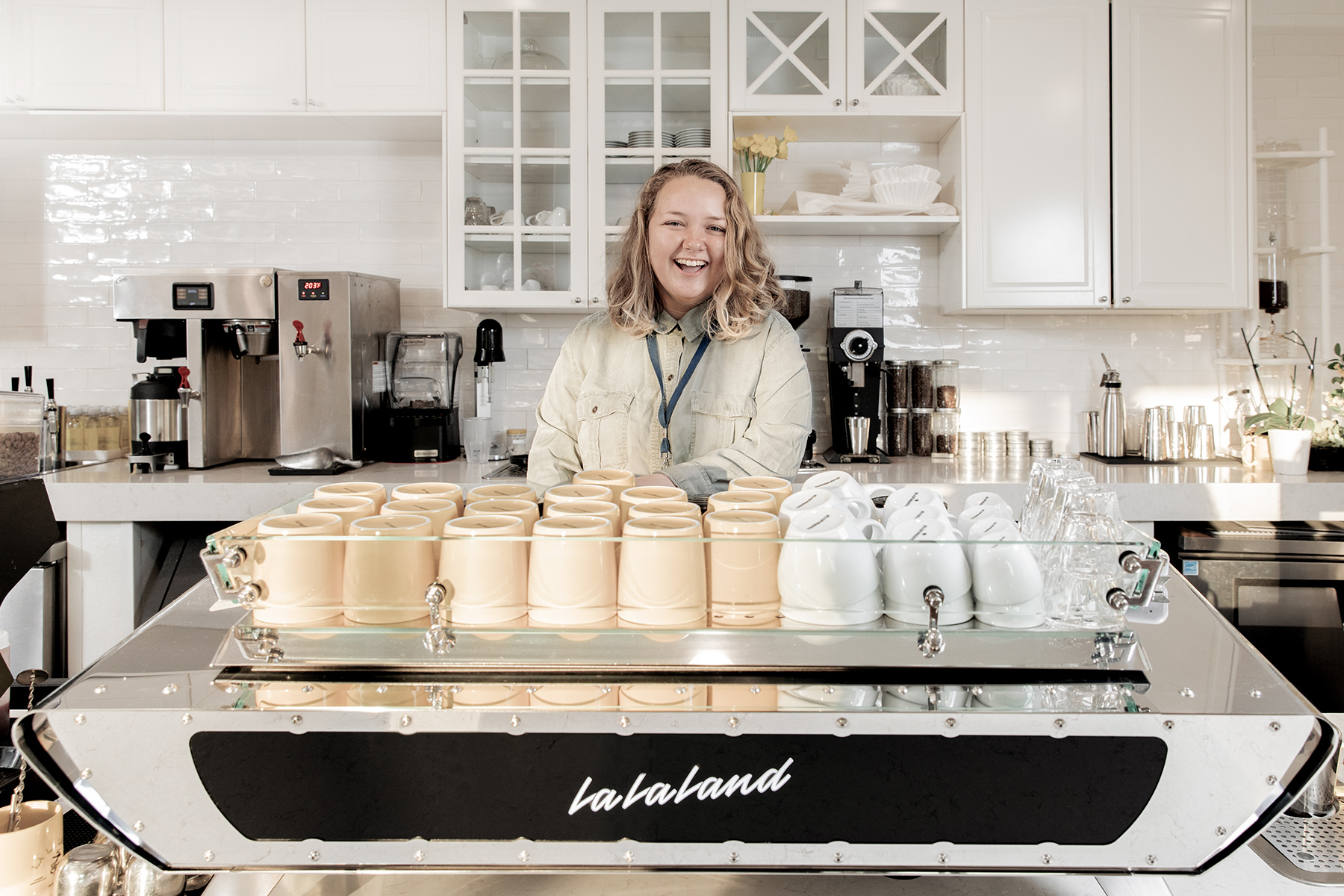
COFFEE WITH A MISSION
La La Land Kind Café
Multiple locations
La La Land landed with its signature, joyful yellow branding and a mission to employ youth who have aged out of the foster care system. We profiled them, so you can read about how they began brightening the world from their original white house in Lower Greenville. (They’ve since added more locations in Texas and even sunny Southern California.) For cheer, try the beautiful aqua tones of a butterfly pea flower iced latte or mauve hues of a Lavender Bloom, and know that there’s heart and a thoughtful infrastructure behind every sip.
Well Grounded Coffee Community
Casa Linda/Oak Cliff
Founded by Michael and Natalie Huscheck, the café and its faith-based nonprofit, The Dignity Project, team up with local Exodus Ministries to train and employ women rebuilding their lives after incarceration or addiction. The cozy, unfussy cafés pair robust coffee and a sense of purpose.
Be Kinder Coffee
Northeast Dallas
Hidden inside an office building, Be Kinder Coffee is a nonprofit that focuses on employing and supporting refugees. Founder Jane Gow was young when her family fled Vietnam. Now, she melds coffee and compassion, with fair-trade organic beans that are ethically sourced. Stay awhile or grab a bottle of the stellar cold brew and a bag of homemade granola to go, and know that your coffee dollars are doing real good.

HYBRID COFFEE SHOPS
Common Good
Old East Dallas
Part coffee bar and listening room, part hair salon, Common Good hums with creative energy in Old East Dallas. Turntables, a vintage hi-fi system, and vinyl hold down one end of the shop, DJs drop by on weekends, and the coffee program—simple, dialed-in, and Lemma-roasted—keeps things grounded. It’s a stylish place to sip, listen, and ease into the day.
La Casita Coffee & Bakeshop
North Dallas
When baked-goods beacon La Casita Bakeshop opened a café—inside Half Price Books on Northwest Highway, no less, in what was once Black Forest Coffee—we rejoiced. Start with horchata cold brew and a knockout pastry like the much-loved churro cruffin. Brunch includes a housemade English muffin Benedict or coffee-soaked pan de muerto French toast. Then return after dark when a Mexican tiki bar, La Tiki Paisa, emerges. Whenever you catch it, the vibe is lively and indulgent.
Le Bloom
Knox Street
We can safely say this is the only coffee shop on this list that started as a flower cart, but it’s also the only shop serving lattes with the cult-loved dairy alternative Fronks, an Austin-based nut milk brand. Le Bloom only keeps morning (7 a.m. to 1 p.m.), but it’s a pleasure en you can pop in.
Local Jonny’s
North Dallas
In a stretch dominated by chains, this coffee bar-general store opened in 2024, the brain child of husband and wife Lauren and Jon Glover, transplants who settled into North Dallas after years of moving around. Locally roasted coffee shares space with Texas-made goods and brand-name snacks—yes, including Flamin’ Hot Cheetos. A playful drink menu is heavy on cold foams and flavored lattes, and matcha variations. Nimble, Local Jonny’s feels like a neighborhood catch-all: coffee stop, gift shop, and daily ritual rolled into one.
Triumphs Espresso & Whiskey
Design District
Triumph has fantastic coffee and terrific whiskey, and it’s no wonder, as it’s a creation of Mike Mettendorf, the same coffee heavyweight behind La Réunion, State Street Coffee, and Parterre. So go ahead and go from lavender Kyoto cold brew to live jazz and cocktails. We dare you.
Soirée Coffee Bar
Trinity Groves
Soirée Coffee Bar blends coffee and jazz into an inviting space. Signature lattes are named after jazz legends and spiked options beckon later in the day. Soirée intentionally supports Black-owned vendors and builds community.
Good Boy Café
Deep Ellum
Hidden inside Deep Ellum vintage shop Hey Konēko, Good Boy Café is small and perfectly stylish. Lemma-roasted coffee anchors a classic menu of espresso drinks with house-made syrups adding subtle flair. Named in honor of owner Linda Bishop’s rescue dog Tsuki, the space is dog-friendly—a gem that rewards those who wander in.